Replace SharePoint with Process Director
With workflow functionality in SharePoint retired and InfoPath Forms discontinued, many organisations are reviewing the market for a SharePoint alternative.
Process Director is the perfect SharePoint alternative.
SharePoint challenges
SharePoint is an excellent information and document repository, but it cannot effectively apply business rules, supply adequate governance capabilities and, most importantly, it requires the work of a team of software developers and administrators to manage all but the most basic functionality effectively.
Whether you are considering SharePoint or planning to replace it, we recommend you consider SharePoint alternatives due to a number of common challenges.
The basics are very basic
Whilst it is possible to very quickly achieve some useful results, the starter templates and user interfaces are crippled by their ease of use. As soon as you get into the detail, you quickly realise another level of effort is required…
The detail is very complex
If you have complex requirements or just need to meet your specific methods of operation, it is likely to be beyond SharePoint’s basic capabilities. This will force you in to needing specialist skills and custom coding, which is time-consuming and expensive to maintain.
Performance issues
With hosted SharePoint imposing throttling to allow fair resource usage as well as limits on data storage, performance can be poor.
SharePoint users may experience delays and/or sluggish perfromance when performing tasks, accessing files, or collaborating with other users.
Steep learning curve
With so many tools and features, Microsoft SharePoint can take a long time to learn properly, especially if you are starting from scratch.
Overwhelming product set
With SharePoint sitting alongside Power Apps, Power Automate, Power BI, Azure, Microsoft 365, Office, and Exchange as one part of the overall Microsoft offering, it can be overwhelmingly complex to work out what products you need, let alone understanding what it will cost you.
Unpredictable costs
Microsoft have attempted to simplify pricing by bundling services together. For example, if you want Power BI Pro, that comes with no less than 24 other services you may or may not want!
Long-term support
With such a broad portfolio, the threat of Microsoft withdrawing support for your product is an ever-present danger.
Replace SharePoint workflows with Process Director
Process Director is a business process automation platform and a great alternative to SharePoint workflows. The platform empowers citizen developers and IT teams to build business applications that automate and optimise their most critical processes.

Process Director provides several ways of building user-friendly electronic forms, with the results appearing the same to end users.
These include an online form designer (OFD) for easy drag-and-drop creation and the Microsoft Visual Studio-based builder, aimed at .Net developers who require advanced technical features.
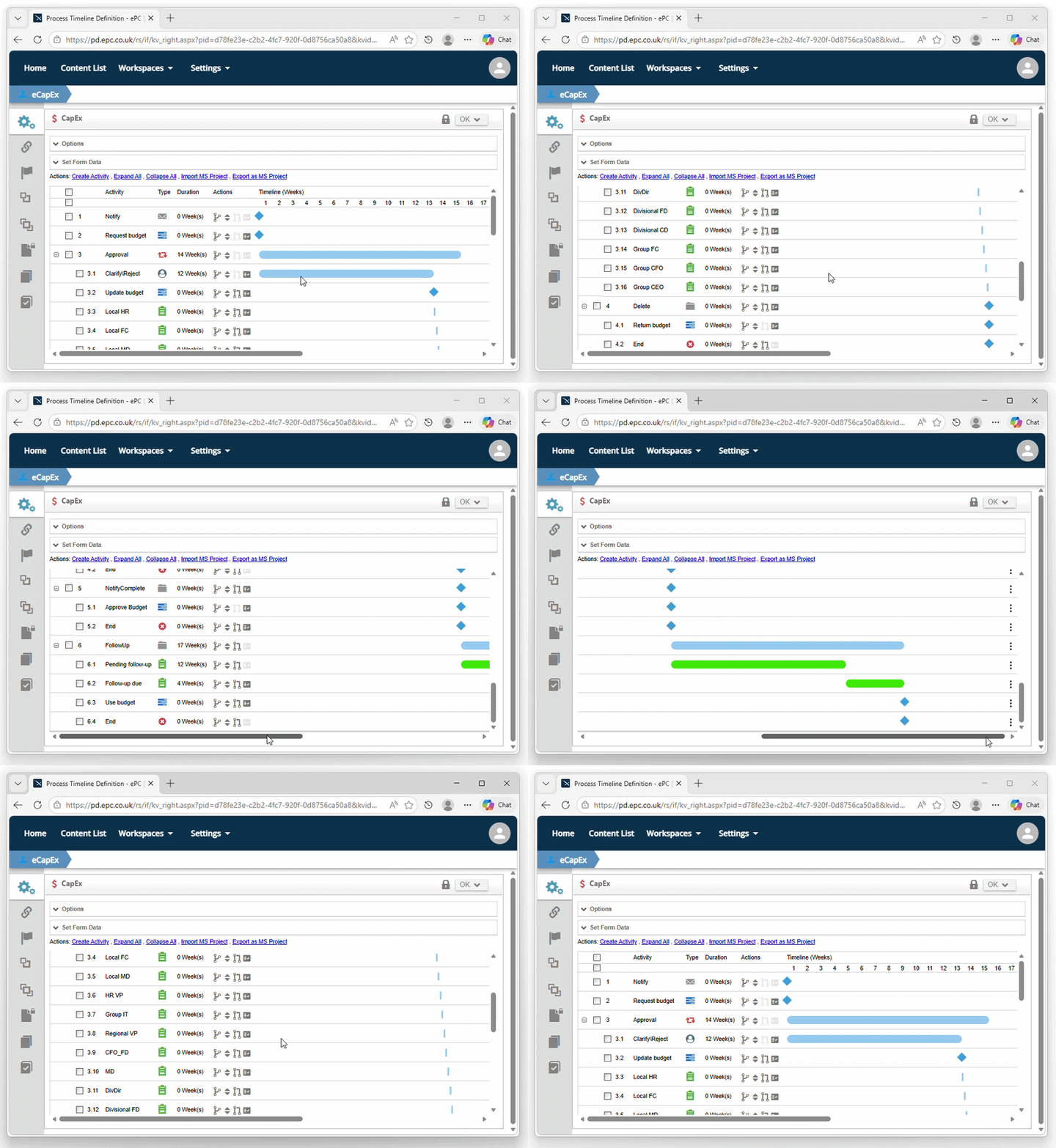
Process Director transforms how you design, automate and manage complex business processes.
Using an intuitive Gantt-chart interface, it allows multiple activities to run concurrently, tracks progress against expected completion times and predicts potential delays before they impact your operations.
With Process Timeline, you can improve process efficiency, accelerate completion times and gain greater control over business-critical operations.

Web workspaces serve as the primary interface to the system, enabling authorised users to:
- Initiate new processes
- View task lists
- Search archive forms
- Export data
The web workspaces also serve as intuitive dashboards, providing real-time visibility into your business processes. The dashboards contain task lists, tabular data, and chart/graph widgets to display real-time metrics, including project status and cycle times.
You can also apply filters, download pre-configured reports, or schedule them for automatic distribution.
Export data in various formats (CSV, XLS, PDF, SPSS, and more).

Empower business users – with knowledge of their department’s pain points – to build forms, workflows and interfaces in weeks rather than months with low-code development.
Process Director’s low-code development environment enables both business and IT users to create and modify applications without extensive coding requirements.
A graphical interface empowers users to build feature-rich applications with point-and-click tools, templates by use case, and pre-built connectors. No coding is required.

Thanks to the patented Process Timeline™, Process Director is the perfect fit for case management work, orchestrating and adapting workflows in response to real-world changes.
The low-code platform provides an adaptive case management workflow that allows case workers to make decisions, assign tasks, and collaborate effectively to promptly resolve complex cases.

Process Director supports direct integration, web services and REST/SOAP calls, giving you access to a huge variety of in-house and third-party services.
Its .NET Software Development Kit (SDK) enables near-limitless capabilities to create reusable, bespoke custom tasks and integrations.
Additionally, you can export data to flat file formats (e.g., CSV, Excel).
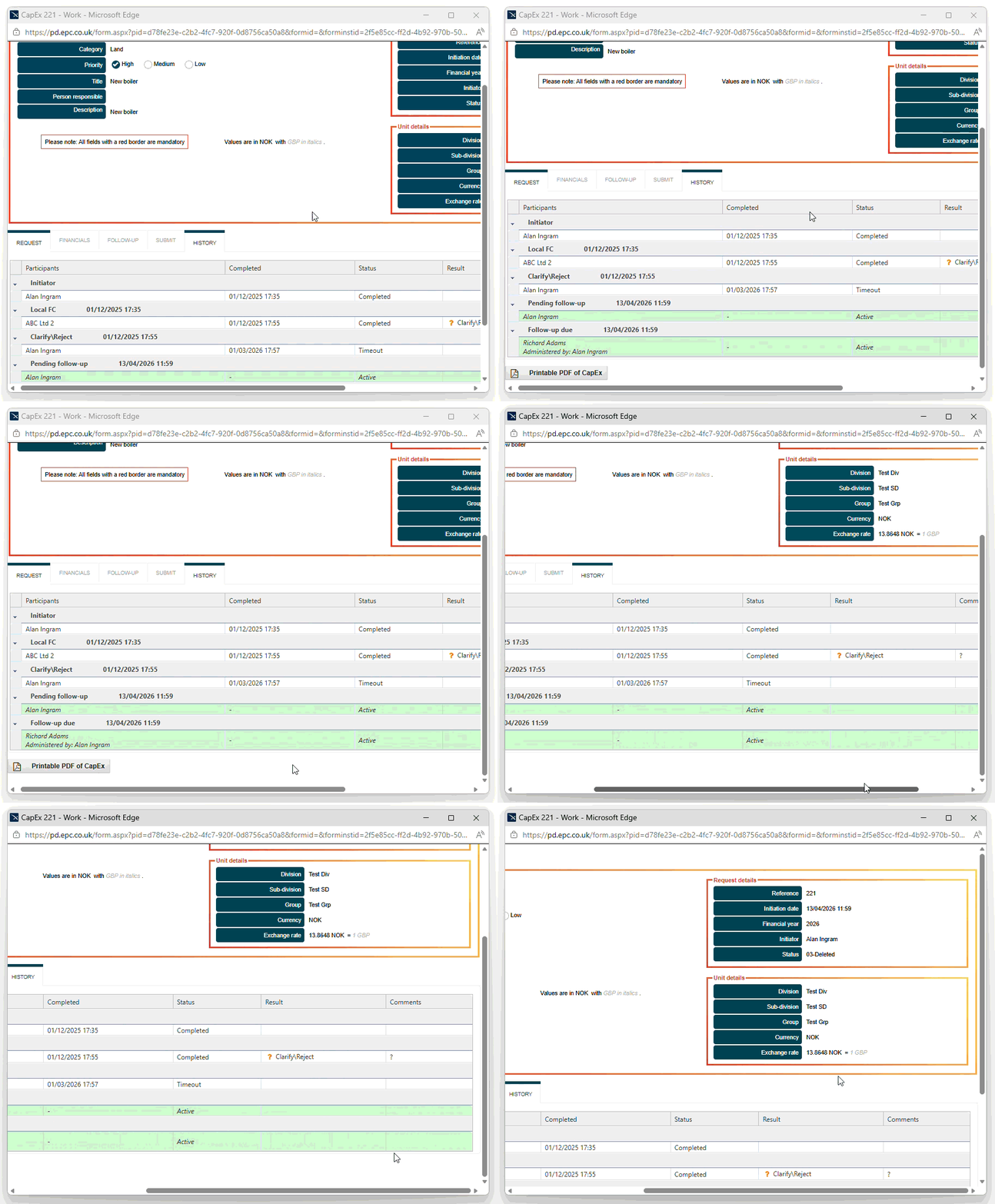
- Full audit trail of all transactions and user activity
- Role-based access control (RBAC)
- Single Sign-On (SSO) via Microsoft Entra ID, Active Directory (AD) and other providers through SAML 2.0.
- Multi-factor authentication (MFA)
- Data encryption in transit and at rest
- Centralised document management
- Cloud-based hosting in a UK-based, ISO 27001-certified data centre or Microsoft Azure global infrastructure
- 99.95% uptime commitment for cloud deployments
- On-premises deployment
- G-Cloud and Digital Outcomes and Specialists approved
- Cyber Essentials certified

Process Director vs. SharePoint
Process Director is a leading low-code process automation platform and one of many alternatives to SharePoint. Learn how it compares to Process Director below:
| Capability | Process Director | SharePoint |
|---|---|---|
| Complex workflow nesting and chaining | Fully supports complex nesting and chaining of workflows | Limited support; custom coding required, making it difficult and expensive |
| Process centricity | Multi-centric (human, document, event, automated) processes | Primarily document-centric; not well-suited for process management |
| Available process patterns | Offers extensive process patterns and configurations | Limited to two process patterns: sequence and machine state |
| Governance and compliance | Comprehensive governance and compliance capabilities, including audit tracking | No governance or audit tracking capabilities |
| Case management | Out-of-box case management functionality | No native support; requires custom development |
| User implementability | Business users can implement processes without IT assistance | Requires IT specialists for implementation |
| Integrate with legacy/enterprise platforms | Seamlessly integrate with existing systems | Limited integration options |
| Business rules engine | ||
| Predictive notifications | ||
| Predictive automated actions | ||
| Data virtualisation | ||
| Time-based process action triggers | ||
| ML/AI for automated decision making | ||
| Partner/supplier/customer applications |
Process Director v SharePoint
SharePoint’s limited number of process patterns restricts the flexibility and options available for modelling and managing business processes.
| Process pattern | Process Director | SharePoint |
|---|---|---|
| Sequential process | ||
| State machine | ||
| Parallel | ||
| Conditional | ||
| Looping | ||
| Sub process | ||
| Escalation | ||
| Human-centric | ||
| Event-driven | ||
| Timer-based | ||
| Case management | ||
| Dynamic routing |
Process Director vs. MS Power Apps
Microsoft encourages SharePoint users to migrate to Power Automate, which is part of the Microsoft Power Platform alongside MS Power Apps.
In the table below, we compare Process Director to MS Power Apps.
| Capability | Process Director | MS Power Apps | |
|---|---|---|---|
| Complex process modelling and execution Workflow nesting and chaining, dynamic routing |
Power Apps lacks the advanced features required to execute processes that involve multiple steps, stages, and conditional routing. | ||
| Predictive notifications and automation Proactive decision-making with automated alerts and actions |
Limited | Users can set up simple event-based alerts and notifications in Power Apps, but it does not offer predictive analytics that automatically identifies issues and help organizations optimize processes. | |
| Data virtualisation Integration with diverse systems for real-time data access |
Limited | Power Apps integrates with systems like SharePoint, SQL, or Oracle, but lacks seamless integration for real-time data access across diverse sources. | |
| Time-based process triggers
Optimised scheduling/execution for time-sensitive processes |
Limited | Power Apps offers basic time-triggered actions but lacks support for complex multi-step workflows and event-driven actions. | |
| Governance and compliance
Dedicated GRC emphasis suitable for regulated industries |
Limited | Power Apps lacks the GRC features essential for highly regulated industries, including robust audit tracking, compliance reporting, and data security measures. | |
| Business rules engine Support for complex business logic and enforcement |
Limited | Power Apps offers basic rule-setting options, but it struggles to support more intricate business rules, conditional routing, or case-specific decision-making. | |
| Dynamic routing Automated task assignment based on rules |
Power Apps lacks automated task assignments based on complex rules or conditions, necessitating manual handling or basic rule sets. | ||
| Event-driven automation Automated actions based on events |
Limited | Power Apps supports basic event-triggered actions but lacks advanced event-driven automation capabilities required to respond to a wide range of events/ conditions. | |
| Case management Support for end-to-end case handling |
Limited | Power Apps lacks native support for end-to-end case management, hindering the management of cases involving multiple stages, approvals, and interactions. | |
| Microsoft system integration Integrates seamlessly with Microsoft systems |
Both Process Director and Power Apps integrate perfectly within a Microsoft environment. | ||
| Legacy system integration Old ERP software, on-premises databases, custom-built apps |
Limited | Power Apps’ lack of compatibility with certain legacy systems means that integrations may require additional effort and development work. |
While Microsoft offer users incredibly powerful products and tools, Power Apps is not robust enough to fully meet the requirements of automating complex and highly regulated business processes.
Process Director offers advanced process modelling capabilities, robust compliance features, and the ability to seamlessly integrate with Microsoft environments —making it the superior choice for businesses seeking a tailored solution for their complex automation needs.
Latest news
Book demo
Are you considering a SharePoint workflow alternative to automate approval workflows?
Call 03300 100 000 or complete our form to discuss your requirements.
We will not share your details outside of our organisation and will only contact you to discuss your enquiry. Read our privacy policy.
